


Created May 15, 2026
How To Beat The Last Minute Dance Recital Stresses (Without Losing Your Mind)
Running a dance recital feels a bit like spinning plates while someone keeps handing you more. That’s why it’s important to have systems in place that ensure smooth event operations and help reduce stress. If you’re a UK studio owner with a summer show approaching, these practical systems will help you reclaim calm before curtain call.
Quick Wins: Calm the Chaos in the Final 7 Days
No matter when your recital lands in the year, the final week doesn’t have to feel like chaos. Being well-prepared with costumes, shoes, and makeup can eliminate last-minute panic before a performance. Here’s your countdown:
7 Days Out
- Finalise running order and send to tech team
- Confirm volunteer list with written role assignments
- Check your ticket selling software, like Stage Stubs, dashboard to see remaining seats and adjust allocations if needed. If you do have remaining seats, you can action this by doing last minute pushes on emails, socials etc.
- Ensure all tasks are clearly listed to avoid missing any important steps
3 Days Out
- Complete costume check for every class
- Test music cues and QR ticket scanning at the venue
- Send reminder to parents about the show, what they need to know and with the event page link so they can buy tickets online directly (if they've not bought them already).
Recital Day Morning
- Print master folder (contacts, schedule, seating plan)
- Brief volunteers with written instructions
- Arrive 90 minutes before doors for final sound check
These steps reduce panic because decisions are made in advance, not under pressure. However, it's easy to miss crucial details if they're not listed and checked off, so always review your checklist carefully. For more information about how to help ensure recital day goes well, see our range of free tools, including our dance recital planning checklist.
Why Recital Stress Hits So Hard (And Why It’s Not Your Fault)
Picture this: it’s the week before your show. Someone’s forgotten their character shoes. Parents are emailing at midnight asking about seat locations. And your younger classes are worrying about forgetting their routines...
The main stress sources include:
- Admin overload – juggling spreadsheets, WhatsApp groups, and paper costume lists
- Ticket sales uncertainty – not knowing what’s sold or how many seats remain
- Parental expectations – repeated questions about arrival times and photography rules
- Safeguarding concerns – managing backstage access and child collection
- Tech worries – music cues, lighting, and untested equipment
What truly matters is having reliable systems in place to handle these challenges, especially systems that let you customise the ticket purchasing experience and streamline communication.
Most dance teachers were never trained as event managers, yet they’re expected to handle all of this alongside regular classes, and managing their business. The stress isn’t personal failure, it’s missing systems. Unlike organisers who have robust event management tools, you’re left to juggle everything manually.

Set Up to Sell Tickets Online So It Practically Runs Itself
Having a reliable way to sell tickets is one of the biggest levers for reducing recital stress. Online ticketing platforms help you sell tickets online for a range of events, including concerts, festivals, corporate functions, and attractions. Stage Stubs ticket selling platform allow you to start selling tickets quickly, with no setup fees or hidden charges. Each ticket sold generates funds and money for your studio, with fast access to revenue and improved cash flow.
Stage Stubs works as a dedicated ticketing platform for dance studios, offering custom seating charts that match your actual venue layout. Key stress-reducing features include:
- No cash envelopes or bank transfers to track
- Parents can buy tickets 24/7 without messaging you
- Real-time visibility of how many seats are sold per show
- Free for organisers (fees paid by attendees)
- Weekly payouts to manage cash flow before your next event
Modern ticketing solutions often include features like promo codes, seating options, and QR code scanning for check-in, which enhance the overall event management experience.
Best practices:
- Open sales at a clearly advertised date and time
- Use simple multiple ticket types (Adult/Child)
- Set per-family limits to avoid awkward conversations
Implementing marketing tools like electronic flyers and Facebook re-targeting can expose your event to a larger audience. Utilising a mix of channels for ticket sales—social media, email campaigns, and QR codes on promotional materials—can significantly drive traffic to your ticketing page. Stage Stubs can generate ticket selling posters for you, in our range of free tools.
Making the Ticketing Platform Experience Easy for Parents
A clear and intuitive ticketing page is essential for reducing friction in the purchasing process, making it easier for attendees to find and buy tickets. When setting up an online event page to sell your ticket, it's important that your page includes:
- Clear show times and venue address
- Arrival instructions and parking details
- Any restrictions (e.g., “no under-5s for 7pm performance”)
Mobile-friendly layouts with obvious “Buy tickets” buttons give parents the best experience when booking from their phone between school runs. Customising the ticket purchasing experience can enhance attendee satisfaction by allowing you to add branding, adjust checkout appearance, and include custom questions. With Stage Stubs, you can set up your event in as little as ten minutes, quick, easy and simple, just what you need.
Build a Backstage Dream Team (So You’re Not Doing Everything)
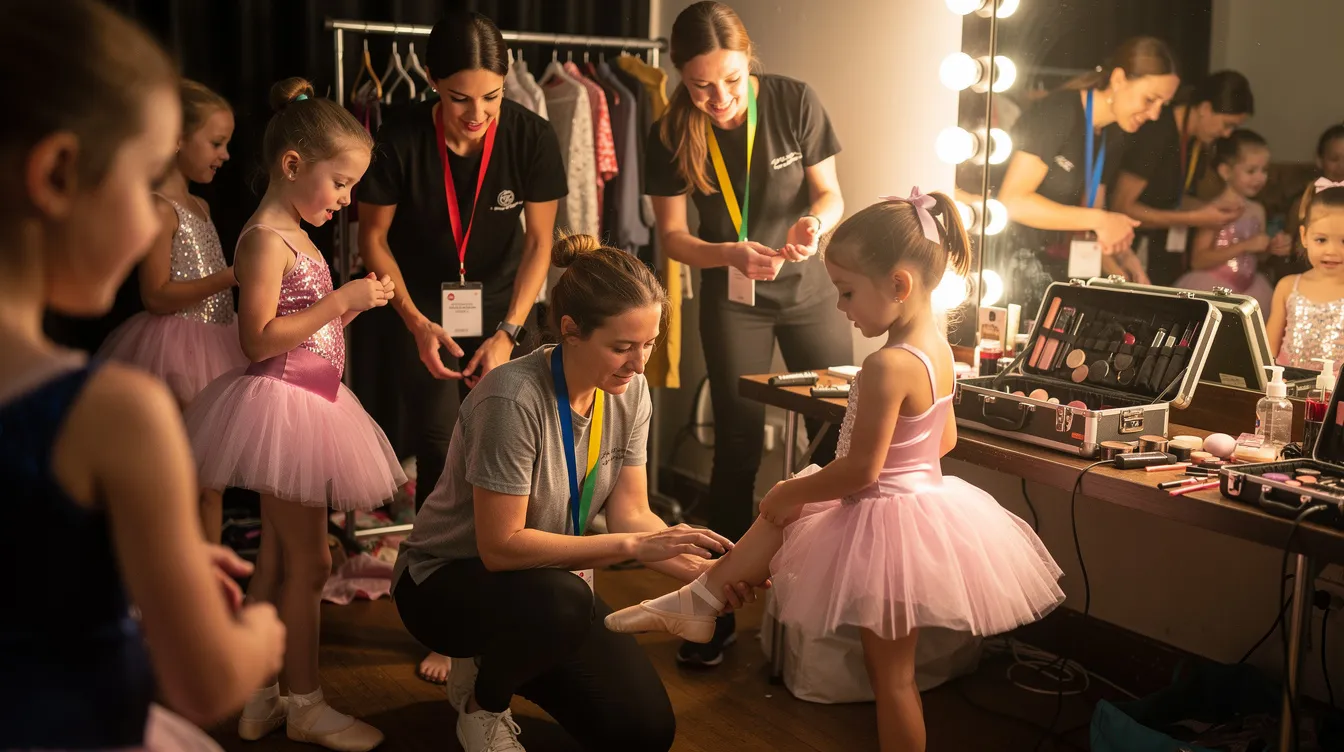
The fastest route to less stress is accepting you cannot be choreographer, stage manager, and safeguarding lead simultaneously. Which is why having a dedicated backstage team, is essential, and supporting your backstage team is crucial for the smooth running of your show.
Essential backstage roles:
| Role | Responsibility |
|---|---|
| Dressing room leads | Supervise each age group, manage costumes |
| Side-stage runner | Handle props, cue transitions |
| Quick-change helper | Assist competition team with rapid changes |
| Parent check-in | Manage child drop-off and collection |
| Snacks/first aid | Hydration, minor incidents |
Briefing Volunteers Clearly (In Writing, Not Just Verbally)
Under pressure, verbal instructions vanish. Your one-page volunteer brief should cover:
- Arrival times (e.g., “Call time 4:30pm, doors 5:30pm”)
- Room assignments and contact numbers
- Child safety protocols and collection procedures
- First aid location and emergency contacts
Send this document 3–5 days before the show and have printed copies at sign-in. If someone drops out, a replacement can read the sheet and understand their role within minutes.
Put Everything on Paper (Or Screen) Before Your Brain Overflows
If it’s only in your head, it’s a stress risk. Writing everything down is one of the most powerful anti-panic tools available.
Documents to prepare:
- Final running order with approximate timings per act
- Class-by-class costume and prop checklists
- Music cue sheet for tech team
- Front-of-house plan for ticket scanning and seat guidance
Use a shared folder (Google Drive works well) so teachers, volunteers, and senior students access the same up-to-date details. On the day, keep a printed master folder for quick reference.
Scheduling Emails and Messages in Advance
Schedule all parent communication 1–2 weeks before the recital:
- Ticket launch – Stage Stubs event link, show dates
- One week reminder – “Last chance to buy tickets”
- Show-day checklist – Arrival time, hair, makeup, what to pack
- Post-show thank you – Photos link, save-the-date for next event
Using email scheduling features means these send automatically, freeing your mind for final preparations.
Show-Day Systems: From Door to Curtain Call
It’s Show Day, and the first show is at 2:00pm. A clear system keeps everything running smoothly.
Front-of-house flow:
- Clear signage at venue entrance
- Dedicated table for last-minute queries
- Separate child drop-off area away from main queue
- Each person should be directed to the appropriate area for a smooth and efficient experience
Modern ticketing platforms, like Stage Stubs include an app with important features like QR code scanning for check-in, which streamlines attendee management and reduces wait times.
Deliver a short housekeeping announcement before the first number: no flash photography, exit routes, and early collection procedures.
Managing Kids’ Nerves (And Your Own) Backstage
Nerves are normal before a performance, and reframing nervous energy as excitement can actually enhance performance. Controlled breathing is one of the fastest ways to calm the nervous system before going on stage.
Quick tips:
- Run a short warm-up with visualisation techniques-help performers picture success and focus on positive outcomes
- Create a calm “quiet zone” corner
- Appoint older students as buddies for younger dancers
- Build in a 10-minute buffer before the first number
- Ensure dancers have a light meal with complex carbohydrates to maintain steady energy levels
Post a printed timeline backstage so everyone can see when each group goes on, reducing “Are we next?” anxiety. For yourself, try two deep breaths and a sip of water between each major task.

After the Recital: Decompress, Review, and Plan the Next Event with Less Stress
Block out one quiet hour in the week after the show to reflect while details are fresh. Send a thank-you email to parents, dancers, and volunteers within 48 hours, include highlights, a photos link, and save-the-date for your next event. You couldn't run your show without the help of the volunteers, so it's important that you recognise the work they've done.
Event ticketing platforms allow organisers to measure event success by tracking sales performance, understanding customer buying trends, and evaluating results through analytics tools. Many platforms provide analytics tools where you can review all sales and performance data listed in your ticketing platform, helping you optimise future events based on these insights.
Review your Stage Stubs data: measure which performance sold out fastest, which price tiers performed best, and how revenue compared to previous shows, using the listed analytics and reports.
Turning Your Systems into a Reusable Recital Playbook
Compile your checklists, email templates, volunteer briefs, and ticketing settings into a single “Recital Playbook” folder. Using a ticketing platform centralises the management of ticket sales, attendee information, and payments, which saves time season after season.
Add timeline dates to each step:
- 10 weeks before: Confirm venue
- 8 weeks before: Create Stage Stubs event
- 6 weeks before: Launch ticket sales
- 1 week before: Final parent reminders
Using the same platform for every show keeps your playbook consistent and easy to hand off to trusted staff members in future.
Each recital is a chance to refine your systems-meaning every next event should feel calmer and more professional than the last. Start building your playbook today, and your future self will thank you.
Find out more about how you can use Stage Stubs to support the running of your event, with our range of resources:
- Make additional revenue with Stage Stubs event tickets
- You’ve done the hard work, let Stage Stubs do the rest
- Benefits of offering a tiered seating plan for your events
Create your event and start selling your tickets in minutes. (Interested? See how Stage Stubs compares to TicketSource, or Eventbrite, and Trybooking.)

