
Cinderella Character Guide
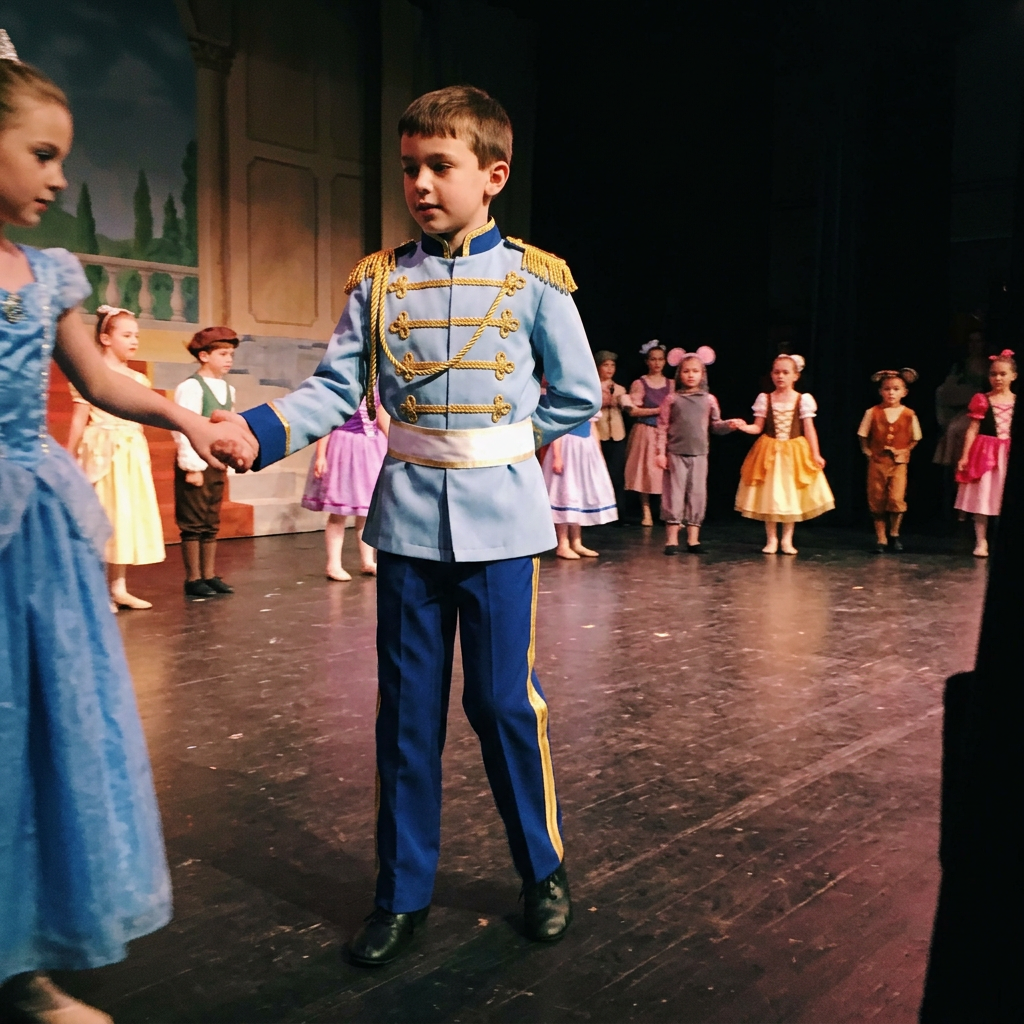
Prince Charming
Prince Charming is the heir to the kingdom, bored by the parade of eligible guests at the ball until Cinderella walks in and changes everything. He is noble, earnest, and genuinely smitten. In the ballet version he is a substantial dancing role. In the Disney version he is more of a presence, but either way, his partnering skills carry the ballroom scene.
Personality for Dance
The Prince moves with trained, upright posture. Shoulders back, chest open, head high. He has been taught to walk into rooms like he owns them, because he does. But his demeanour is warm, not arrogant. When he first sees Cinderella, his composure breaks slightly. A pause, a double-take, a step forward that he catches himself making. During the waltz, he is attentive and present, leading with gentle confidence. After she flees at midnight, his movement becomes urgent and searching. He scans crowds, he strides with purpose, he will not rest until he finds her.
The Outfit
Top
A white or cream fitted tunic or military-style jacket with gold or silver braiding and epaulettes. The jacket should be structured and clean, with high collar or Nehru collar for a regal silhouette. Underneath, a white dress shirt. The jacket needs to allow full range for partnering, so avoid anything too stiff across the shoulders.
Bottom
White or cream fitted trousers, straight leg. For ballet, white tights with a short tunic work if your dancer is comfortable. For a more theatrical approach, tailored trousers with a stripe down the side read well from the audience. Either way, the line from hip to foot should be clean and long.
Accessories
A sash across the chest in royal blue or red. A simple crown or circlet for the ball scenes, nothing too heavy or it will shift during partnering. White gloves for the formal scenes. A sword prop at the hip can add character but remove it before the waltz.
Shoes
White or black character shoes with a low heel for stability during partnering. If doing ballet, white ballet shoes or soft boots. The shoes must allow for smooth turns and secure footing when supporting Cinderella in lifts or promenades.
Hair
Neat, swept back, and out of the face. A clean side part or gelled-back style works. The hair should look like someone styled it for him, because someone did. It should not move during the waltz.
Special Details
For the slipper-fitting scene at the end, give the Prince a cushion or small stool prop to kneel with. This moment should be staged with real care. He kneels, she extends her foot, the slipper fits, and the whole audience exhales. It is the payoff for everything. A spotlight on just the two of them sells it.
Movement Tips
-
Partnering technique is everything in this role. The Prince leads the waltz, supports Cinderella in promenades and turns, and needs to make her look effortless. Rehearse the partnering more than any solo work. During So This Is Love or Prokofiev's waltz, the connection between their hands and eyelines tells the love story. -
Before meeting Cinderella, the Prince should look politely bored at the ball. He dances with other guests out of duty, his posture correct but his energy flat. When Cinderella enters, everything shifts. His weight comes forward, his focus sharpens. The contrast sells the moment. -
The search sequence after midnight is a chance for dramatic movement. The Prince can cover the whole stage, moving through groups of guests, checking faces, growing more desperate. This is where he stops being polite and starts being real. -
In the final slipper scene, slow everything down. The Prince has been searching the whole kingdom. When he finally kneels before Cinderella, let the stillness do the work. No rushing.
Best for ages 12-17. The Prince absolutely needs a dancer with partnering experience or the willingness to rehearse it extensively. Lifts are not required but supported turns, promenades, and a secure waltz hold are essential. This role suits a technically clean dancer who is comfortable being attentive to a partner rather than showing off solo skills. Younger dancers aged 10-12 can play the Prince in a simplified version without lifts.
Ready to sell tickets for your Cinderella recital?
Stage Stubs makes it simple to sell tickets online. Create your event, set your prices, and start selling in minutes.