
Hercules Character Guide
Hercules
Hercules is the son of Zeus, stolen from Mount Olympus as a baby and raised as a mortal. He is impossibly strong but painfully awkward. He breaks everything he touches and cannot fit in anywhere. His journey is about learning that being a true hero is not about strength but about sacrifice.
Personality for Dance
Young Hercules is a walking disaster. He trips, he stumbles, he accidentally destroys market stalls with his super strength. His movements are too big for his body. He overreaches, he overbalances, he does not know where his limbs end. As he trains with Phil, the clumsiness becomes controlled power. His stance widens, his movements become precise, and the strength that was a liability becomes grace. By the finale, he moves like a god. The transformation is physical storytelling at its best.
The Outfit
Top
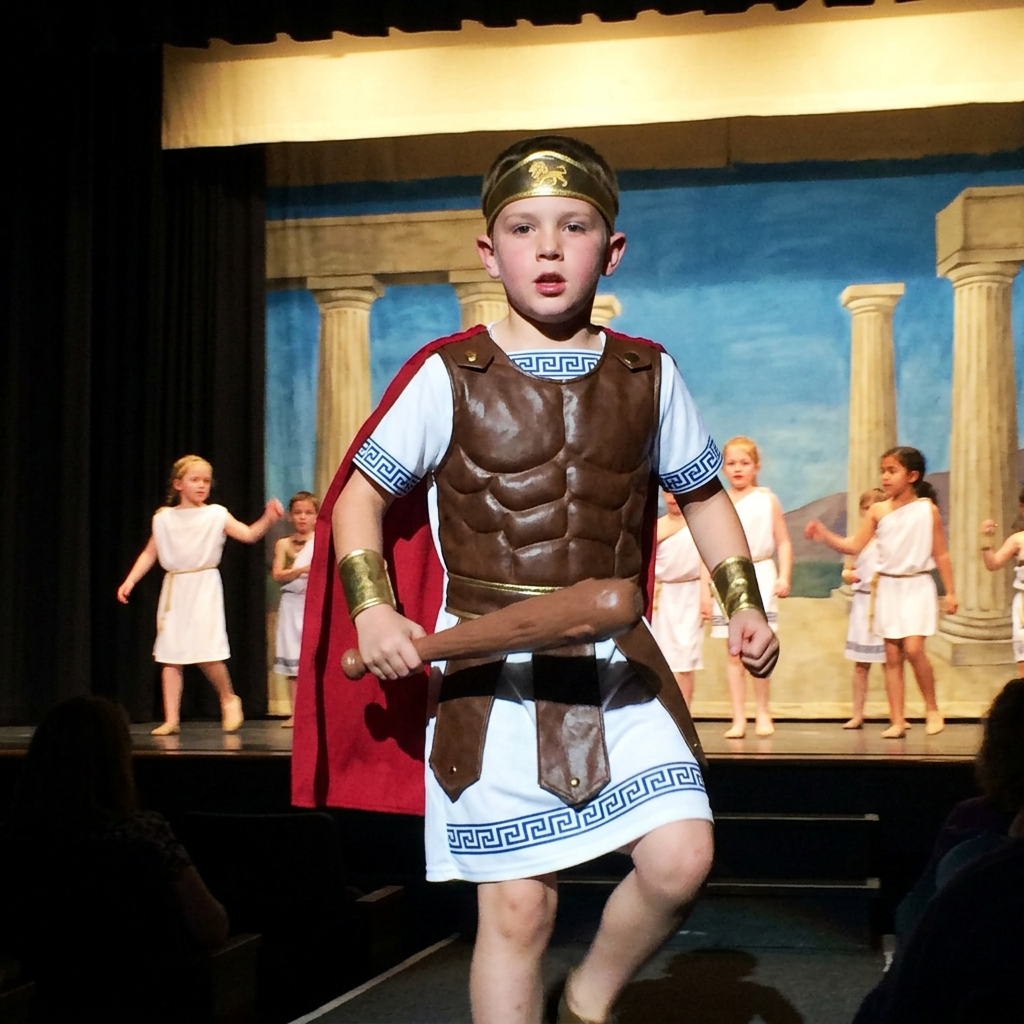
Young Hercules wears a simple brown or tan Greek tunic with rope sandals. The tunic should be slightly too small, suggesting he has outgrown everything he owns. Hero Hercules steps into golden chest armor or a gold and brown tunic with a leather skirt, arm bracers, and a flowing red cape. A gold headband or laurel wreath completes the divine look.
Bottom
For the young Hercules sections, plain tan or brown shorts or leggings beneath the tunic allow for all the tumbling, tripping, and physical comedy. For the hero sections, a leather-look skirt or kilt in brown or tan with gold trim gives the classical Greek warrior silhouette. The contrast between the two costumes is part of the storytelling.
Accessories
The red cape is the single most important accessory for hero Hercules. It should be dramatic enough for heroic poses and full enough to billow when he turns or leaps. Arm bracers in gold or faux leather add to the warrior look. A simple rope belt for the young sections and a gold cord belt for the hero sections mark the transition clearly.
Shoes
Rope sandal-style shoes or brown character shoes for both versions of the costume. The shoes need to allow for tumbling and big jumps, so keep the sole flat and the ankle secure. Gold lace-up sandal covers over dance shoes work well for the hero sections and are practical for fast costume changes during the Zero to Hero montage.
Hair
Curly brown or auburn hair, kept loose and slightly wild for young Hercules. For hero Hercules, a gold headband or laurel wreath tames the curls slightly. If using a wig, choose something with volume and movement. The hair should look like it belongs to someone who has never owned a mirror and does not particularly care.
Special Details
Build the costume to allow for the transformation between young and hero Hercules. A quick change or the removal of an outer layer to reveal the hero costume underneath works well for transitions during Zero to Hero. The moment the red cape goes on should feel like a reveal. Time it to a musical hit and let the audience respond.
Movement Tips
-
Go the Distance is a solo that starts grounded and builds steadily upward. Open the number with Hercules on a hillside, looking out at a horizon he cannot reach. The movement begins close to the earth, weight in the legs, reaching arms that pull back before they fully extend. With each verse, the body opens further. By the final chorus he is reaching for the sky with full extension, leaping, turning, claiming the space around him as if the stage itself is Mount Olympus. -
The clumsy phase requires controlled slapstick that reads as genuine awkwardness without looking unsafe. Rehearse the comedy carefully. He trips into people with a stumble that begins in the hip, not the foot. He accidentally knocks things over with a swing of the arm that is slightly too wide. He overbalances on turns that almost work. The key is that every accident looks like it came from trying too hard, not from carelessness. The audience needs to believe he wants to get it right. -
The Zero to Hero transformation sequence is a montage, which means the choreography should feel like a training film compressed into three minutes. Start with Hercules failing at everything. He cannot lift the weight, he stumbles through the footwork, he knocks Phil over. Then, in layers, things start to click. The footwork becomes clean. The lifts go up. The movements get bigger and more controlled. By the final sequence, he is hitting every count and filling every corner of the stage. -
Find one signature hero pose that the audience will recognise and return to it at key moments throughout the show. A wide stance with both fists raised, or a single arm extended with the cape behind him. Establish it during Zero to Hero and bring it back at the climax. When the audience sees it the second and third time, they will respond to it.
Best ages 10-17. The role needs comedic ability for the early clumsy scenes and strong technique for the hero sections. A performer who can do both is the ideal, but if you need to split the role between two dancers for young and hero Hercules, the transition during Zero to Hero can be built into the choreography. Younger performers aged 8-9 can play young Hercules in ensemble or opening sections with the older performer taking over for the training and hero sequences.
Ready to sell tickets for your Hercules recital?
Stage Stubs makes it simple to sell tickets online. Create your event, set your prices, and start selling in minutes.