
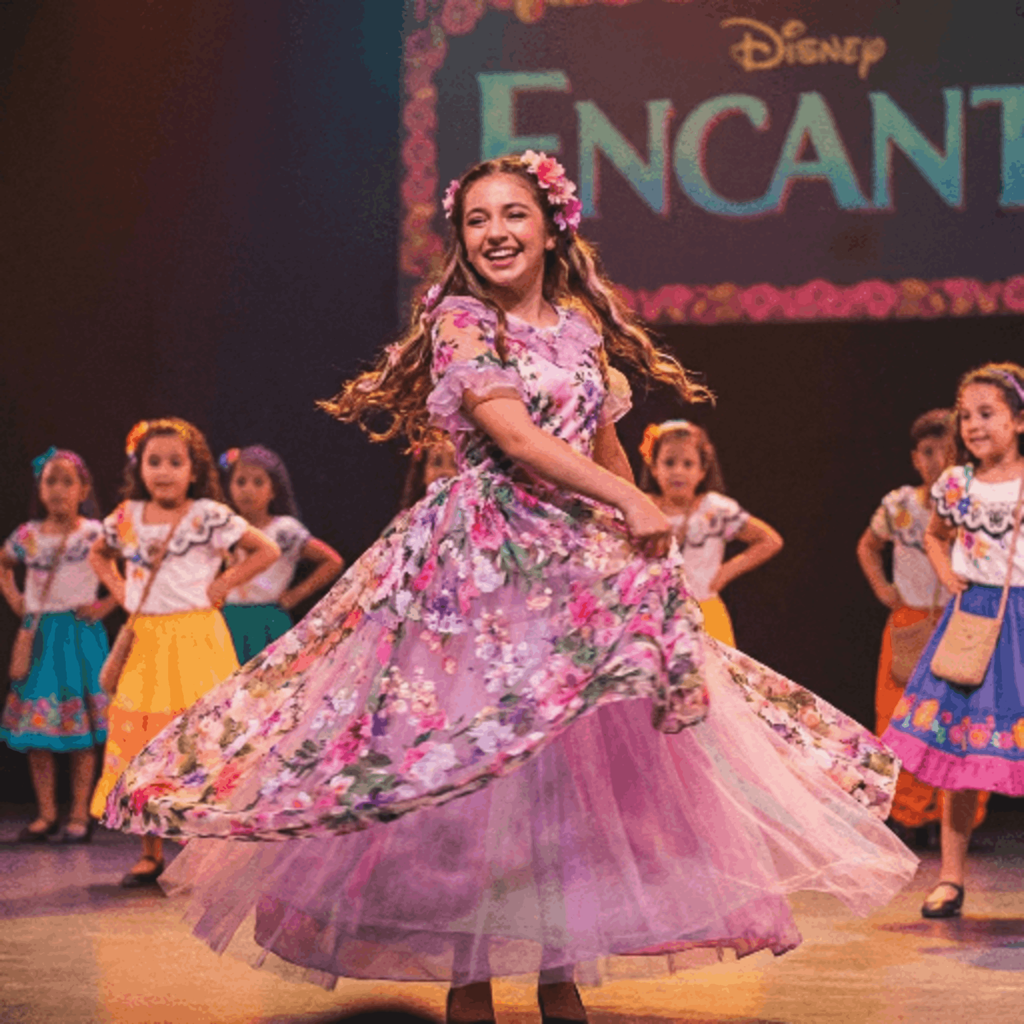
Encanto Character Guide
Isabela
Isabela is the eldest Madrigal grandchild, gifted with the power to grow flowers and plants. Everyone sees her as perfect. She is beautiful, graceful, and engaged to the most eligible man in town. But she has been performing perfection her whole life and she is exhausted by it. Her song What Else Can I Do? is her rebellion, finally letting herself be messy and real.
Personality for Dance
Isabela starts the show with controlled, elegant movement. Every gesture is precise, every position picture-perfect. Her chin is lifted, her smile is fixed, she never has a hair out of place. But watch for the moments where the mask slips. A flash of irritation, a suppressed eyeroll, tension in her shoulders. By What Else Can I Do?, she transforms completely. Her movement becomes wild, impulsive, joyful. She throws shapes she has never tried before. The perfectionist becomes an explorer.
The Outfit
Top
Purple fitted bodice with floral embroidery or applique details. The neckline should be modest but elegant. Flowers along the shoulders or sleeves suggest her gift.
Bottom
Long flowing purple skirt that moves beautifully during spins and jumps. Multiple shades of purple work well, from lavender to deep violet. Built-in shorts underneath for the wilder choreography.
Accessories
Flower crown or flowers woven into hair. Pink and purple fabric flowers work better than real ones. Small earrings are fine but nothing that distracts from her face.
Shoes
Pink or purple ballet flats or soft character shoes. She is light on her feet, not grounded like Luisa.
Hair
Long black hair worn down and flowing, or in an elaborate updo that can be let down dramatically during What Else Can I Do?
Special Details
For her transformation, consider costume elements that can change. A removable flower crown, a skirt overlay that comes off to reveal a shorter version underneath, or flowers in multiple colors she can throw or scatter. The before and after should look noticeably different.
Movement Tips
-
Early scenes: controlled, symmetrical, ballet-influenced. Every line is clean. -
React subtly to the pressure of being perfect. A tightened jaw, a forced smile, fingers that fidget then stop. -
During What Else Can I Do?, let everything go asymmetrical. Off-balance turns, unexpected directions, genuine surprise at what her body can do. -
Grow with the flowers. Her hands lead outward, reaching, spreading, like vines extending. -
The sisterly conflict with Mirabel should show in her body. Dismissive turns away, then gradual softening.
Best for ages 12-17. The role suits dancers with strong ballet or lyrical training who can show the contrast between perfection and freedom. The emotional journey requires acting ability. Younger dancers aged 9-11 can play a simplified version focused on the graceful movement without the complex internal conflict.
Ready to sell tickets for your Encanto recital?
Stage Stubs makes it simple to sell tickets online. Create your event, set your prices, and start selling in minutes.