
Cats Character Guide
Skimbleshanks
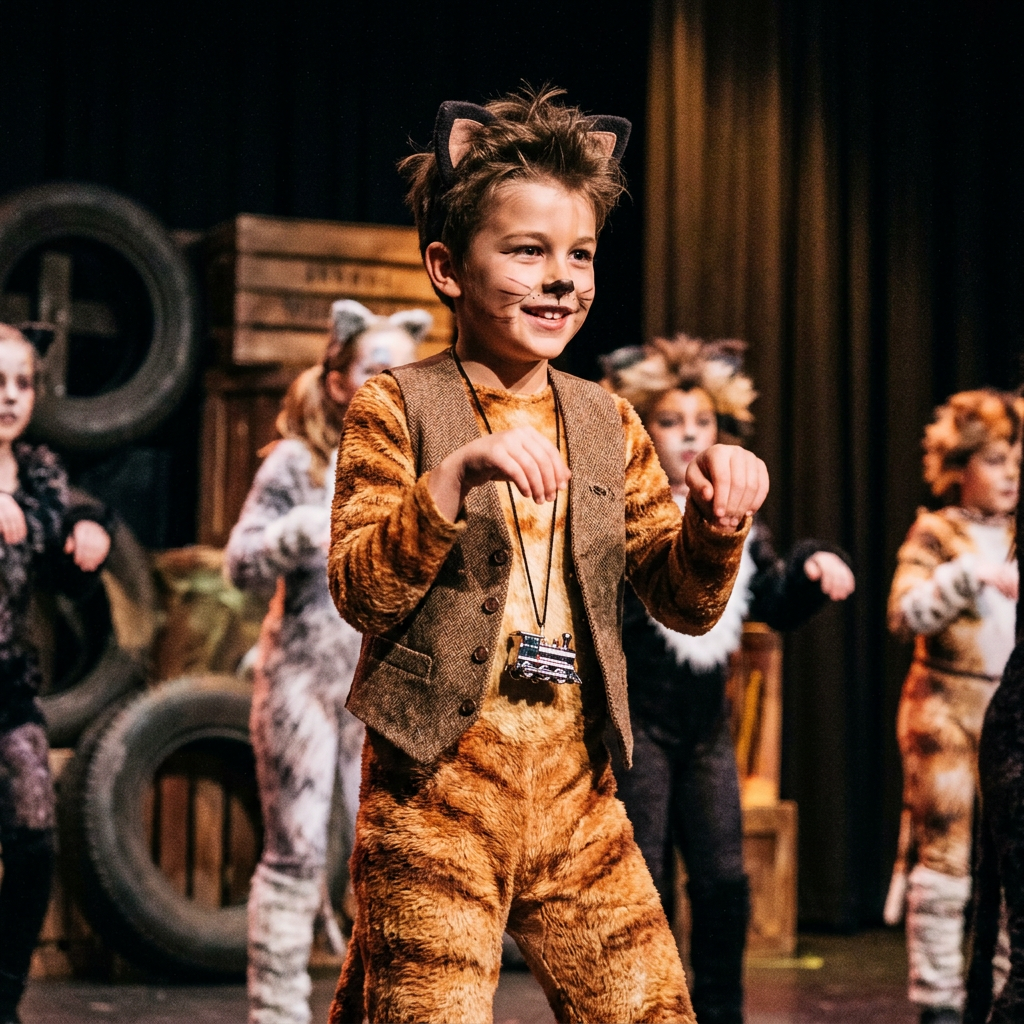
Skimbleshanks is the cat of the railway train. He keeps the Night Mail running on time and no train departs without his inspection. His number is one of the most creative in the show, as the ensemble builds an entire train out of junk and dance.
Personality for Dance
Skimbleshanks moves like clockwork. Every step lands exactly on the beat, every gesture is at the precise angle it needs to be, every inspection of the train is thorough and efficient. He checks things off an invisible list. He nods when satisfied. He moves on. His body language is all straight lines and right angles. Arms snap to positions rather than flowing into them. Feet tap the beat even when he is standing still. He is the most metronomic cat in the Jellicle world, and he is proud of it. The railway is not just his job. It is his calling.
The Outfit
Top
An orange and brown tabby-striped unitard as the base, with stripes running vertically to lengthen the silhouette. Over the top, a waistcoat in railway green or warm brown, with small pockets and a formal lapel. The waistcoat should be fitted enough not to interfere with movement but substantial enough to read from the back row as a proper working garment.
Bottom
The striped unitard continues on the legs. The stripe pattern should be consistent from top to bottom so the overall effect reads as a tabby cat in a conductor's waistcoat rather than a costume assembled from separate pieces. Tap shoes or jazz shoes at the feet.
Accessories
A railway cap or conductor's hat is the defining accessory. It should sit firmly on the head and stay put through the physical number. A pocket watch on a chain, either real or prop, that Skimbleshanks can check at specific musical moments for comic and character effect. A whistle for the train departure sequence.
Shoes
Tap shoes if the studio teaches tap and the choreography incorporates rhythm work. Jazz shoes otherwise. The footwear choice should be made based on what the studio can actually deliver in performance, not what would be ideal in theory. Skimbleshanks in tap shoes with a well-drilled tap section is extraordinary. Skimbleshanks in jazz shoes with strong jazz choreography is equally effective.
Hair
Neat, ginger or tabby-brown hair to match the costume stripes. Cat ears in matching orange and brown. A small cat nose in dark pink or brown. The makeup should be cleaner and more precise than the other cats to match the character's orderly nature.
Special Details
The pocket watch is a performance prop and needs a designated moment in the choreography. Skimbleshanks checks it when the train is about to depart. He checks it when a dancer arrives late to their mark. He checks it at the end of the number to confirm everything ran on time. Rehearse the watch business as carefully as the steps.
Movement Tips
-
The train building sequence is the creative centrepiece of this number and requires detailed blocking from the earliest rehearsals. Assign each ensemble member a specific role in the train, engine, carriages, wheels, steam. Use simple props such as chairs, crates, or fabric lengths to help define the shapes. Build the train section by section through the song so the audience can watch it come together. The reveal of the complete train shape should land on a specific musical hit. -
Tap or jazz with railway rhythms is the movement language of this number. Think of the rhythmic patterns as the sound of the train itself. A persistent eighth-note chug in the feet under longer phrases in the arms. Syncopated hits that suggest the train going over joints in the track. If the cast includes strong tappers, build a tap break that uses the full ensemble to create the sound of a departing train. This is one of the most effective things a tap class can do on a recital stage. -
The inspection walk is Skimbleshanks's recurring motif throughout the number. He walks the length of the train, checks each section, and approves or adjusts. Choreograph this walk with precise arm positions, a clipboard mime, a nod, a small correction to a dancer's position. The inspection should be genuinely funny because Skimbleshanks is completely serious about it. He is not playing at being a conductor. He is one. -
Use the ensemble as the train throughout the number. They are not backing dancers watching Skimbleshanks. They are the train and he is its guardian. When the train moves, they move together in coordinated groups. When the train stops, they hold positions. When Skimbleshanks gives them a signal, they respond. This requires the ensemble to be well-rehearsed and to understand their role clearly. They are as important as the lead.
Best for ages 10-16. Skimbleshanks needs rhythm precision and ideally tap training. Cast a dancer with a strong sense of musicality and the physical precision to make the metronomic quality of the character read clearly. The role works particularly well for a dancer who is technically strong but not typically given lead roles, because Skimbleshanks rewards precision and clarity over glamour.
Ready to sell tickets for your Cats recital?
Stage Stubs makes it simple to sell tickets online. Create your event, set your prices, and start selling in minutes.