
Cinderella Character Guide
Cinderella
Cinderella is the heart of the story, a kind and resilient young woman trapped in servitude by her stepfamily. She scrubs floors, tends to the fireplace, and takes abuse with grace, but never loses her warmth or her ability to dream. When the Fairy Godmother transforms her for the ball, the audience sees who she has been all along.
Personality for Dance
Cinderella moves with quiet, contained grace even in her rags. Her gestures are gentle and giving. She reaches toward things, picks things up carefully, and tends to others before herself. There is no self-pity in how she carries herself, just patience. When she dances with the Prince at the ball, a new confidence emerges. Her arms extend fully, her chin lifts, and her posture opens up. She is not becoming someone else. She is becoming herself. The best Cinderellas play the kindness as strength, not weakness.
The Outfit
Top
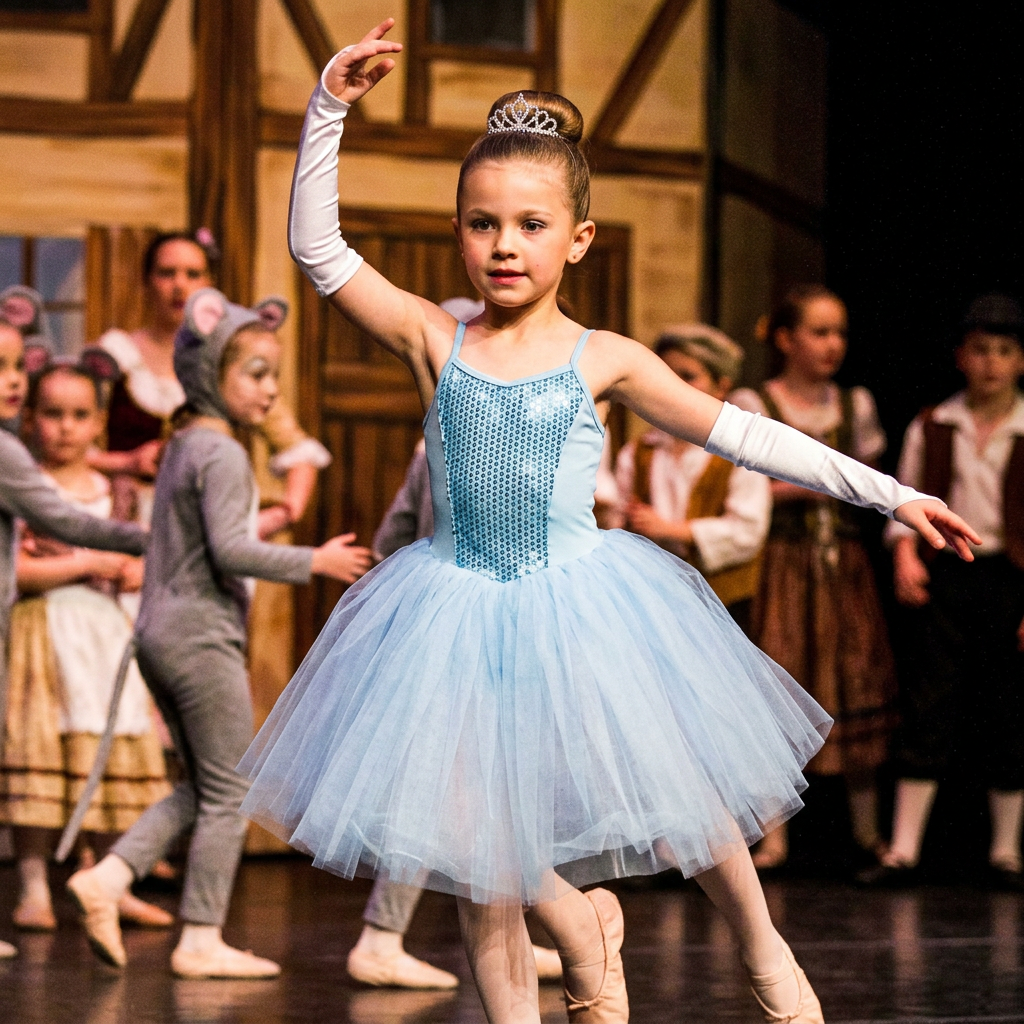
For the rags scenes, a simple brown or grey bodice over a white peasant blouse with the sleeves rolled to the elbows. The fabric should look worn but not torn apart. A small apron tied at the front. For the ball, the iconic pale blue bodice with off-shoulder sleeves and silver or white detailing. The transformation needs to be dramatic, so the contrast between these two looks matters more than anything.
Bottom
A tattered skirt in muted brown or grey for the working scenes, mid-calf length, loose enough for floor work and sweeping choreography. For the ball gown, a full tulle or satin skirt in pale blue that catches the light. It should move beautifully in waltz turns. If you are doing Prokofiev ballet sections, keep the skirt shorter or use a romantic tutu length so footwork stays visible.
Accessories
A headband or simple ribbon to tie back her hair in the rags scenes. No jewellery, nothing shiny. For the ball, a choker necklace, small earrings, and of course the glass slippers. A tiara is optional but works well under stage lights. Keep accessories minimal so the dress does the talking.
Shoes
Bare feet or simple ballet flats in flesh tone for the rags scenes. This makes the glass slipper moment more impactful. For the ball, clear or silver character shoes, or pointe shoes if your dancer is trained. The glass slipper prop for the fitting scene should be a separate, visible item the Prince carries.
Hair
Pulled back in a low, messy bun or ponytail for the rags scenes. Practical, out of the way, like she tied it up in a hurry. For the ball, a classic updo with soft curls framing the face. The hair transformation is part of the magic, so plan the wig or restyle carefully.
Special Details
The costume transformation is the single most important staging moment. Plan it ruthlessly. The best approach is to wear the ball gown underneath a breakaway rags costume that strips off in one motion. Alternatively, use a backstage quick-change with two dressers behind a scrim while Fairy Godmother performs Bibbidi-Bobbidi-Boo downstage. However you do it, the reveal needs to land. Rehearse it twenty times.
Movement Tips
-
In the opening scenes, keep Cinderella low to the ground. She kneels, she sweeps, she scrubs. During A Dream Is a Wish Your Heart Makes, let her slowly rise from floor work to standing, then to reaching upward. The choreography should lift as the song does. -
The waltz at the ball is the centrepiece. Strong classical technique matters here. If using So This Is Love, the movement should be flowing and sustained with long balances and extended lines. If using Prokofiev, lean into the grandeur with bigger travelling steps and sweeping port de bras. -
At midnight, everything reverses. The confident, open movement collapses. She clutches her skirt, runs with small panicked steps, stumbles on the stairs. The glass slipper drop should be a specific, choreographed moment, not an afterthought. -
Cinderella is always aware of others on stage. She makes eye contact with the mice, with her stepsisters, with the Prince. She reacts to people. This is what separates a lead from a dancer doing lead choreography.
Best for ages 12-17. Cinderella needs a dancer with clean classical technique for the waltz and the physical versatility to go from scrubbing floors to gliding across a ballroom. The emotional range is wide, from quiet suffering to joy to panic at midnight. Younger dancers aged 8-11 can play Cinderella in the rags scenes while an older dancer takes over for the ball, which also solves the quick-change challenge.
Ready to sell tickets for your Cinderella recital?
Stage Stubs makes it simple to sell tickets online. Create your event, set your prices, and start selling in minutes.